
Notable Nonprofits: Academy of Music Theatre
Credit: Academy of Music Theatre
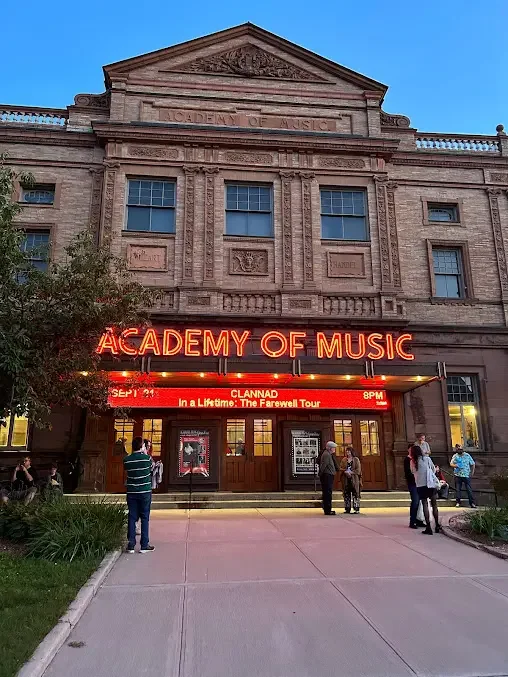
For 135 years, the Academy of Music Theatre has been more than a place to see a show, it has been a gathering place at the heart of downtown Northampton. From legendary performers and historic productions to youth education, community events, and local partnerships, the Academy continues to evolve while staying deeply connected to its community. In this interview, we talk with the Academy of Music Theatre about its mission, its commitment to accessibility and arts education, the challenges of preserving a historic venue, and what’s ahead for this beloved Northampton institution.
Life in Mass (LIM): For readers who may be discovering the Academy of Music Theatre for the first time, how would you describe the heart and mission behind the organization?
Academy of Music Theatre (AOM): While the specific wording may have evolved over time, the basic mission of the Academy of Music Theatre has been the same since the beginning of the organization: to support the arts, educational programming, and community outreach in the City of Northampton and surrounding region. The Academy is located in the heart of downtown Northampton, and it has been the heart of Northampton for 135 years. This is evident in the goals of our artistic vision: to identify, nurture, sustain, and/or present local, regional, national, and global organizations, events, and causes that resonate with the needs, concerns, hopes, and interests of our community.
LIM: The theatre has welcomed many over the years. Do you ever feel the weight, or inspiration, of that history when planning for the future?
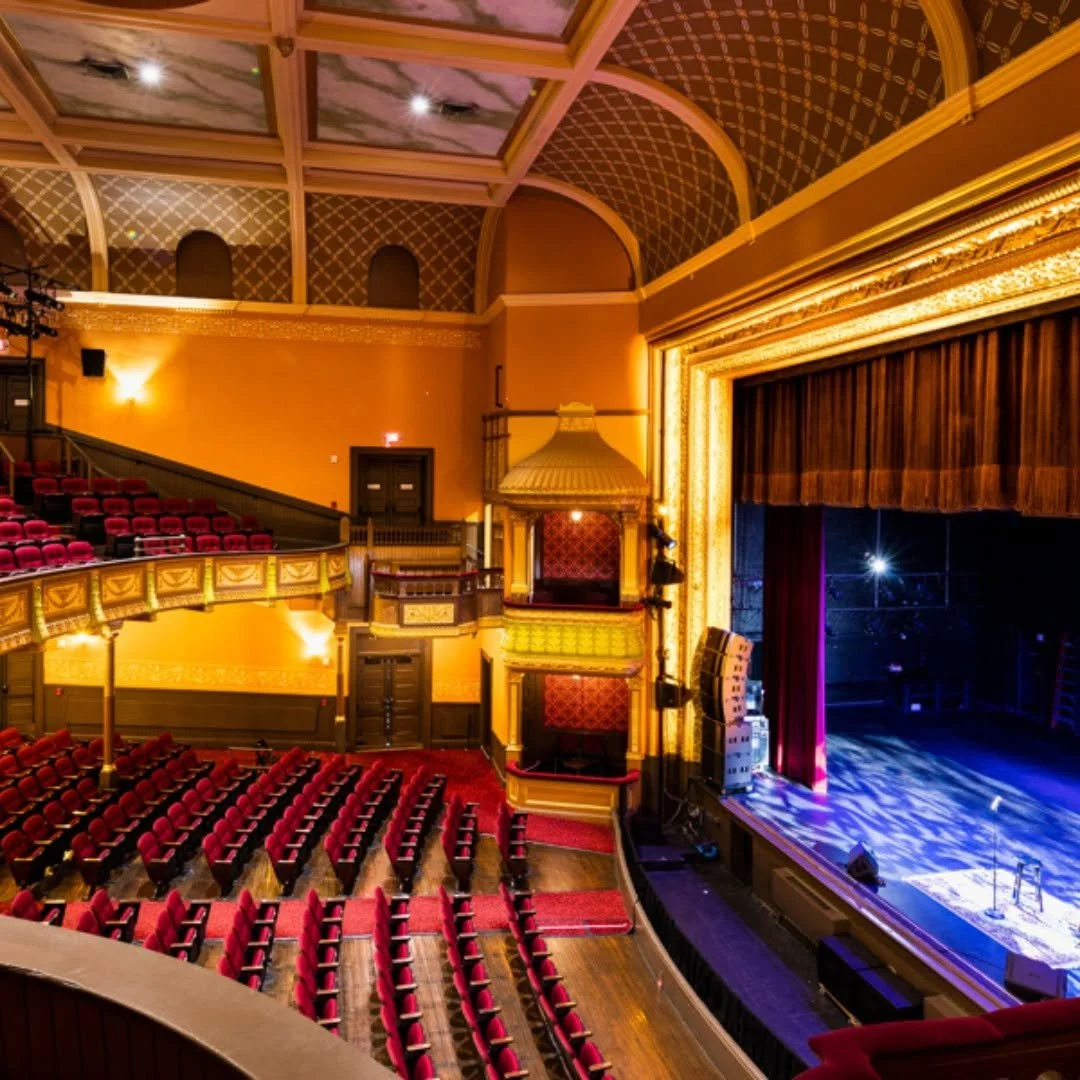
AOM: Absolutely. It's bizarre to think about working in a space that has seen some of the most famous stage performers the world has ever known, and the weight of that is not something we take lightly. We're constantly reminded of these artists: they're part of Academy lore, their photos hang in our salon, their names are on plaques outside our dressing rooms, and visitors ask about their connections to the building. You have to wonder what they would think about the building and the organization today. We'd like to think that Boris Karloff and Mae West would approve of the direction we've taken!
LIM: The Academy emphasizes inclusion and accessibility in the arts. What does creating a welcoming space for the community look like in practice?
AOM: The Academy has participated in the Card to Culture program for several years, which provides free or steeply discounted tickets to WIC, EBT, and ConnectorCare cardholders in Massachusetts. We have also done work around making the building itself more accessible to those with mobility needs, which can admittedly be difficult in a space that was constructed at a time when this was not standard practice. For example, we added flat platforms in several areas of the house to accommodate wheelchairs, and added a ramp for wheelchair accessibility to our stage door for artists and performers. We just completed our Let's Hear It! Campaign in April and raised over $10,000 to purchase and install our first assisted listening device system, which will hopefully be up and running by the end of June. And we offer tiered Pay What You Will pricing for all youth staged programming.
LIM: . What are some recent performances or events that really captured the spirit of what the Academy is all about?
Credit: Academy of Music Theatre
AOM: The Academy has experienced huge growth over the last few years in our youth education programming, and our Academy Youth Productions certainly capture the spirit of the Academy of Music at this moment in time. We've also taken on the entirety of the Valley Voices Story Slam this season, which was a co-production with NEPM for the first ten years of the series. This series has been a community favorite for so many years, and it speaks to the importance of uplifting local voices, telling local stories, and creating space for the community to feel welcomed as audience members and participants in Academy events. We have also hosted productions of new works that provide our patrons with new perspectives on issues that are relevant to our community. These include Sweet, Sweet Spirit, Nobody’s Girl, 2.5 Minute Ride, and (In)Dependent: A Heroin Project.
LIM: Educational programming seems to be an important part of your work. Why is it so important to invest in young artists and arts education?
AOM: An investment in young artists and arts education is an investment in the future of the performing arts. When young people are given opportunities to learn, practice, and perform, they will carry those experiences into their adulthood. Whether they become artists themselves or sit in the audience as supporters, they will see performing arts through the lens of their own experiences with it. And when those opportunities are paired with knowledgeable teaching artists who care enough to invest their energy, time, and talent in the growth of these young people, the lifelong benefits are multiplied.
LIM: Many nonprofits talk about community impact, but the Academy also has a major economic impact on downtown Northampton. How do you see the theatre contributing beyond the stage itself?
AOM: The Academy of Music is a leading visitor destination in Western Massachusetts, and our value is based not only on total ticket sales, but also on the consistent delivery of visiting patrons to downtown Northampton and its shops and restaurants. During FY2025 (July 1, 2024 - June 30, 2025), we served over 60,000 patrons with over 140 ticketed and free events. According to ZIP code data, the City of Northampton reports that this brought almost $5 million in annual spending and purchases, $1.2 million in meals and beverage revenue, $1.3 million in hotel/motel revenue, and $750,000 in hotel guest spending in Northampton. This spending contributed $88,000 in city tax revenue and $196,000 in state tax revenues. Because the Academy is located in the heart of Northampton, our patrons can easily walk to any number of restaurants, shops, and other spaces in the area to spend additional money.
LIM: The Academy works closely with resident companies and community partners. What makes those collaborations so valuable?
Credit: Academy of Music Theatre
AOM: Our resident companies and community partners keep the Academy of Music rooted in the Pioneer Valley community. The most important part of what we do is to be a mainstay in Northampton, and we want our local residents to feel welcome in our space. Having these resident companies and community partners who bring their artists and performers back to our stage season after season means we can continue to build relationships and audiences within our own community, and community relationships are what will continue to sustain the Academy of Music.
LIM: Your volunteer program offers so many different ways for people to get involved. What role do volunteers play in keeping the theatre thriving?
AOM: Our volunteer team is so important to the event operations of the Academy of Music! We have a list of over 100 volunteer ushers who give their time and energy to help our Theater Manager and event staff ensure the safety and comfort of our audiences. These folks attend a yearly training refresher in order to stay current on Academy policies and procedures so our patrons have the best possible experience at a show in our venue. Our volunteers scan tickets at the door, usher people to their seats, assist people with mobility needs, answer questions, and more. Without these folks helping us at every show, our events would be nearly impossible to execute.
LIM: For someone attending their very first show at the Academy, what do you hope they feel when they walk through the doors?
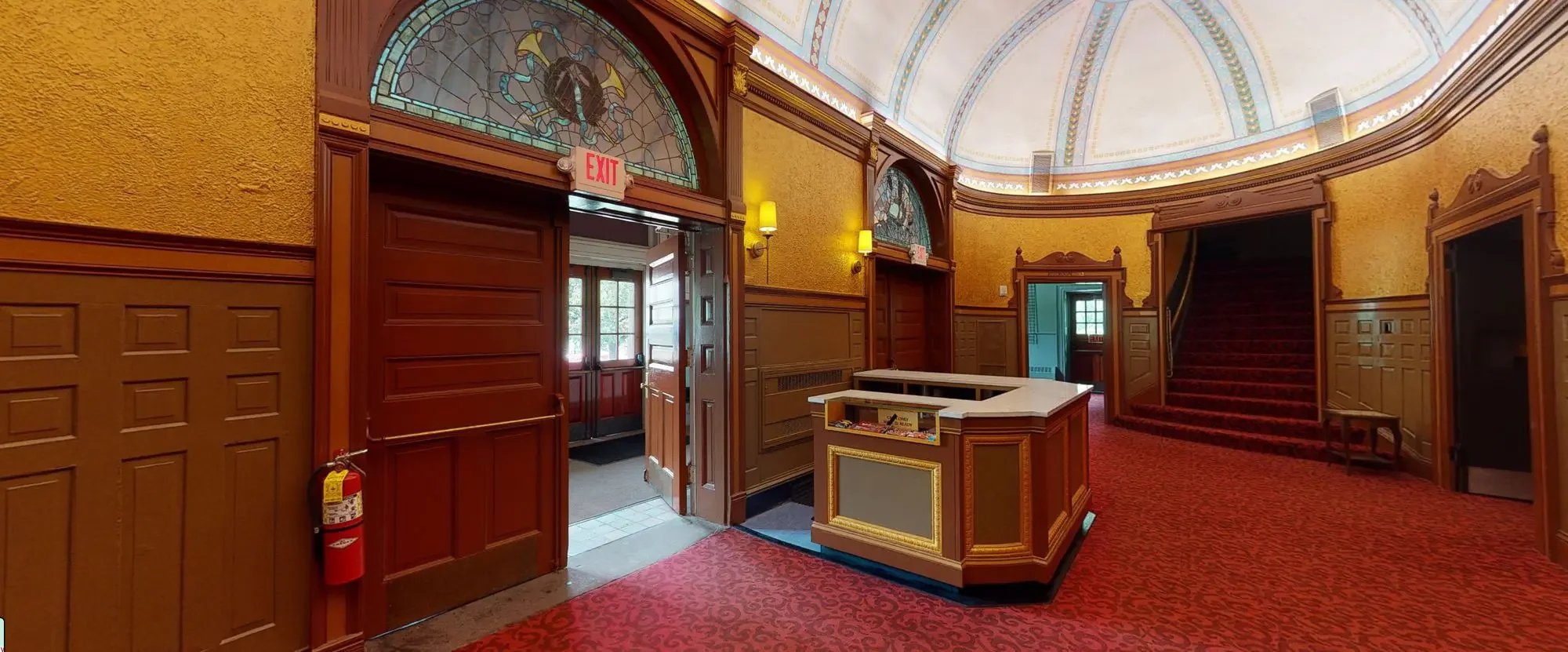
AOM: We hope our first-time audience members feel welcome in our beautiful space. Our event staff can spot a first-timer when they walk through the doors, because their eyes usually go straight up to the hand-stenciled dome that makes up our lobby ceiling. We love showing off the beauty of our historic venue, and we want people to admire the architecture. But more than that, the staff works hard to ensure that our audiences feel like they belong at the Academy of Music, regardless of how many times they've visited, what show they're seeing, how they're dressed, or whether they've ever attended a performing arts event anywhere.
LIM: What are some of the biggest challenges facing historic nonprofit theaters right now, and how is the Academy navigating them?
AOM: One of the biggest challenges in spaces like this is building maintenance. These beautiful old theatres were built during eras when function and form were equally important, and they were built to last. Unfortunately, most of these historic buildings have experienced long periods of time when they weren't properly maintained due to budget constraints, abandonment, or simple lack of interest in caring for them. The Academy is fortunate because the building is owned by the City of Northampton, and the city has been a great partner in maintaining the space, and upgrading and replacing infrastructure when needed. Additionally, our current Executive Director Debra J'Anthony has worked tirelessly in her 18 year tenure to renovate and restore the building to its former glory, as well as raise funds to assist the city with upgrades to the building.
This also brings the challenge of balancing the introduction of new technologies with maintaining the historic integrity of the building. We want to remain technologically up-to-date in order to attract productions and promote organizations who want to bring their events to our stage, but we also want to maintain the charm and historical accuracy of this beautiful building. It can be difficult to find a way of bringing these two important considerations together, but we have some really great people who work together to make it happen.
Another big challenge right now is, of course, funding. With so many cuts to basic needs programs in the country right now, a lot of money is, understandably, being diverted to organizations that address housing, food insecurity, healthcare, education, and more. Theatre – and the arts in general – is essential to thriving mental and emotional health, but when so many people are barely surviving, funding is shifting in that direction. The Academy is navigating this by getting creative with sponsorship trades, community partnerships, and additional grant requests. We are also focusing on increasing our education programming for youth, which helps with some of that lost funding.
LIM: Looking ahead, are there any upcoming productions, programs, or initiatives that you’re especially excited about sharing with the community?
AOM: We have several upcoming items on the horizon that we're excited about! For one, we will soon be installing our first assisted listening device system, making our events more accessible to a wider audience. We are adding a fourth Academy Youth Production in the 2026-27 season, providing another musical theatre opportunity for local youth. Our new Stitch 'n Flix series is entering its third season; we have some fun films lined up for this community favorite, and plans for increased partnerships in the local crafting community. We're making plans for the twelfth season of the Valley Voices Story Slam, which is always a delightful series. And we're very excited to produce the U.S. premiere of a one-woman storytelling show called Afeni, based on the life of Afeni Shakur – mother of the rapper Tupac Shakur – and her experience in the Black Panthers and the arrest and trial of the Panther 21 in the late 1960s.
LIM: What are some ways local residents can support the Academy, whether financially, through volunteering, or simply by showing up for performances?
AOM: All of the above, and more! Attending performances at the Academy of Music – and bringing their friends! – is a great way for local residents to support our work. We have a wide variety of events that come across our stage, with an average of 130 music, comedy, theatre, dance, and spoken word performances each year, so there's something for everybody. Volunteering is another important means of supporting the Academy (and a way of seeing performances at no cost!). Financial support is, of course, always welcome, too, and can come in many forms. Purchasing a ticket is a means of financial support, as is adding a small donation at checkout – those small donations add up and are no less important than the large ones! If someone has a Donor Advised Fund (DAF) or charitable foundation and wishes to donate in this way, we are always grateful. Also, local businesses and organizations can advertise with the Academy each season, or can become sponsors of individual events or series. Some sponsorships come in the form of in-kind donations or trades of goods and services, and don't have to be strictly financial. And we're always open to exploring new partnerships with folks who have creative ideas about how they might want to support the Academy of Music!
LIM: Massachusetts has such a deep artistic and cultural history. What do you hope the Academy of Music Theatre’s legacy will be for future generations?
AOM: We hope future generations of the Academy of Music's leadership will continue to support the arts! The arts are deeply embedded in the rich cultural landscape of Northampton, and our wish is to see the Academy at the heart of this for generations to come.
The Academy of Music Theatre’s story is ultimately a story about community, bringing people together through the arts, creating opportunities for young people, supporting local voices, and preserving a historic space for generations to come. With new programs, expanded youth productions, accessibility improvements, and exciting performances on the horizon, the Academy is looking toward the future while honoring its remarkable past. Whether you attend a show, volunteer, become a sponsor, or simply walk through its doors for the first time, there are plenty of ways to be part of the Academy’s ongoing story.
Academy of Music Theatre
Website · Facebook · Instagram
(413) 584-9032