
Notable Nonprofits: Change is Simple
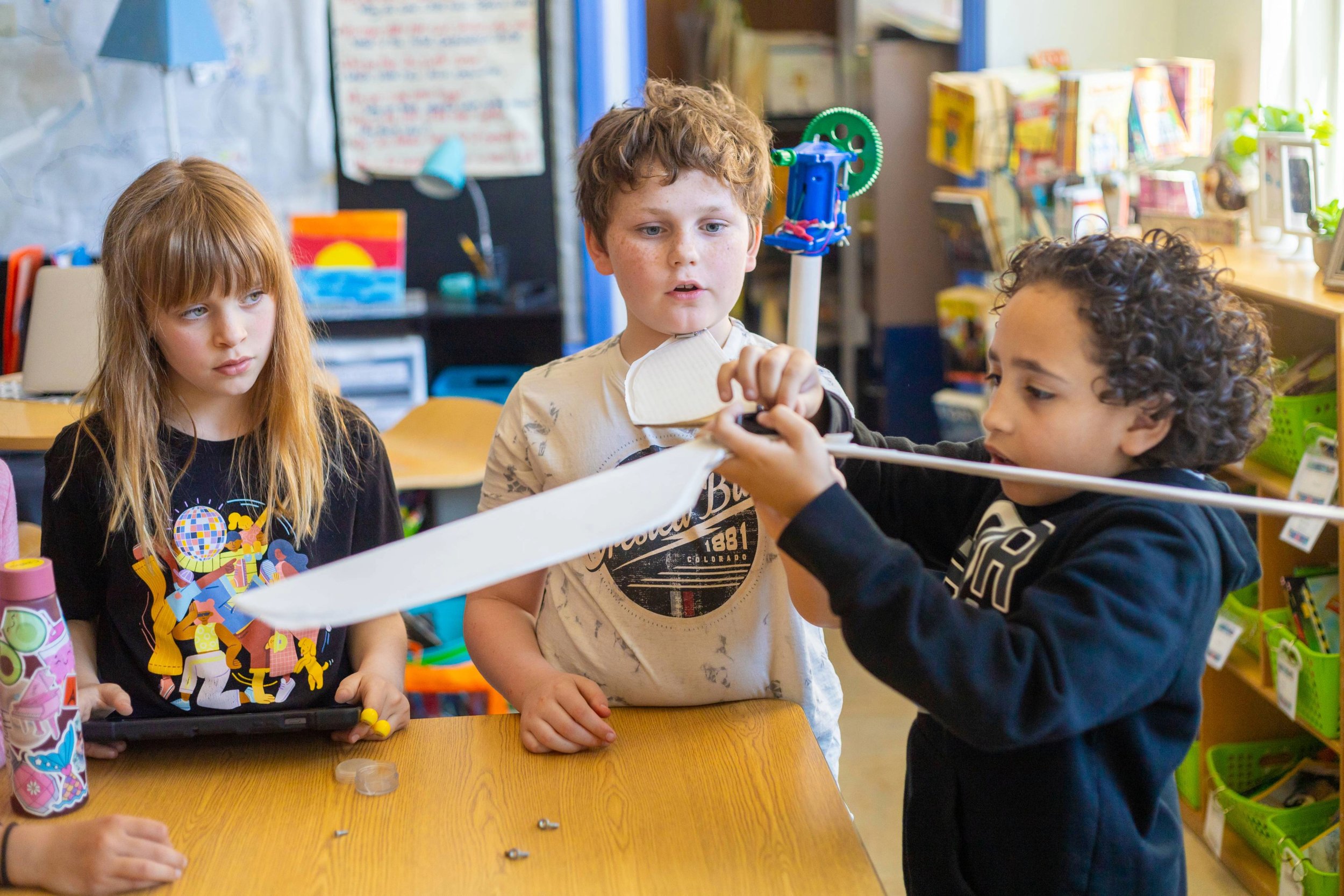
Change is Simple in the Class Room
Credit: Change is Simple
In classrooms across northeastern Massachusetts, something pretty incredible is happening. Students aren’t just learning about climate change, they’re rolling up their sleeves and becoming part of the solution. That’s the heart behind Change Is Simple, a nonprofit that’s transforming how young people connect with the environment through hands-on, meaningful experiences.
What began as a single classroom visit in Beverly has grown into a dynamic program reaching thousands of students each year, empowering them to think critically, act responsibly, and see themselves as changemakers. I recently had the chance to learn more about the organization’s story, mission, and impact—and how they’re helping shape a more sustainable future, one student at a time. We recently spoke with Janelle Rolke learn more about their story and impact on the community.
Life In Mass (LIM): For readers who may be discovering Change Is Simple for the first time, can you share the story of how the organization first got started?
Change is Simple (CiS): CiS was founded in one Beverly, MA classroom in 2011 on the belief that environmental education should be engaging and relevant to students' lives. At the time, now Co-founder and Executive Director, Lauren Belmonte was a scientist working in the field. She was invited to a local elementary school to speak about her work and provide an in-classroom experience.
CiS co-founders, Lauren and Patrick, believe that hands-on learning changes how kids understand complex topics like climate and sustainability so from that one in classroom experience, Change is Simple was born.
LIM: What inspired the founders to focus on climate and sustainability education for young people?
CiS: The vision for Change is Simple (CiS) is rooted in a simple but powerful belief: when children are given the knowledge, tools, and agency to understand their impact on the world, they grow into adults who act with intention, responsibility, and hope.
From Lauren Belmonte (co-founder and Executive Director)
“In 2011, I was doing what I thought was the 'real' work. I was out in the wilderness, mapping rare species and documenting vulnerable ecosystems. But I had this nagging realization: most of my reports were just becoming guides for developers to figure out how to build around or in spite of nature, rather than how to protect it.
When my brother-in-law asked if I’d visit his 4th-grade classroom to talk about my work experience, I remembered my own 5th-grade teacher at Ayers Ryal Side—how she made the world feel connected—and I was excited to show these kids that their own health is tied to the health of the planet.
I started with stories and pictures, but the kids didn't want to hear about my work; they wanted to do it. So, Patrick and I put together one hands-on lesson for three classrooms at North Beverly Elementary. We didn’t have a business plan or a grand vision back then—we just had a few tools and a lot of trial and error.
Seeing those kids take ownership of the science changed everything. We spent the next two years researching and meeting with incredible mentors and advisors to help us turn this 'concept' into a real program. When the Cummings Foundation took a chance on us, we were finally able to hire our first paid employees and start to grow.
Today, we have a staff of 18 people, and that one lesson has grown into a program that has reached 75,000 children. We often think of education as a "slow burn"- something that pays off in twenty years. But when it comes to the climate, education is actually a high-leverage, immediate tool for carbon reduction.
When a child understands the "why" behind the energy they use or the waste they create, they don't just keep that knowledge in a notebook. They bring it to the dinner table, to the grocery store. They become the "Chief Sustainability Officers" of their own households. Project Drawdown actually lists education as one of the single most impactful solutions to reaching "drawdown" (the point where greenhouse gases stop rising and begin to decline). AND, when children are given the knowledge, tools, and agency to understand their impact on the world, they grow into adults who act with intention, responsibility, and hope.”
LIM: Your mission centers on building lifelong environmental responsibility. What does that look like in practice when you’re working with students?
CiS: We reach over 8,000 students a year in northeastern MA, many in Essex County, The program is designed as a multi-year academic journey that builds confidence, shapes behavior, and embeds social and environmental responsibility into everyday decision-making. We transform public school classrooms into ecosystems and construction sites and students into scientists and engineers.
LIM: Change Is Simple uses hands-on, experiential learning. Why is that approach so effective for teaching kids about climate and sustainability?
CiS: Our organization’s approach stands apart from traditional environmental education by emphasizing its relevance to modern life. Students examine the intersection of the natural and human-made worlds while discovering their ability to create change at home, in school, and within their communities. Our program teaches three to six one-hour workshops per class per year at each partner school, with programming spanning from Kindergarten to Eighth grade. Our educators actively engage students through custom-designed workshops that align with classroom objectives. These workshops grow in complexity year after year, integrating science, games, experiments, and creative activities to inspire critical thinking and environmental stewardship. Students take on real-world roles as scientists and engineers, performing tasks like creating green household products, designing sustainable cities, and analyzing weather data. In other words, these lessons are creating core memories with students that are lasting a lifetime!
LIM: Can you tell us about a typical classroom visit or program? What might students experience during one of your sessions?
CiS: Picture this: you are in 4th grade, you’ve spent the last several weeks working on pronouns and multiplication tables, and into your classroom walks a Change is Simple Educator and college student. They’ve brought with them what looks to be a very cool set of tools. You are soon up out of your seat and doing ENERGY themed yoga.
Next you’re figuring out how to build a 6ft working wind turbine. You aren't just reading about renewable energy; you’re generating it. When you go home and your parents ask, 'What did you do today?' for the first time, the answer isn’t 'nothing.' It’s 'I built the future’.
CiS brings the real world into the classroom to kids, and helps them see that the solutions are in their hands."
LIM: You now reach thousands of students across many schools each year. How has the organization grown since those early days in a single classroom?
CiS: The CiS team is currently made of 17 staff members (and growing!)
LIM: Do you have a favorite success story or memorable moment that really captures the impact Change Is Simple has on students?
CiS: From 2023 to 2025, an Alumni Study was conducted by The Evaluation Institute, led by Northeastern professors Drs. Sarah and William Ewell, to assess the long-term impact of CiS education. Data was collected from alumni ages 18+ (7-10 years removed from our program). The findings affirm what we have seen anecdotally for years: our impact extends far beyond elementary school, influencing academic choices, career pathways, and lifelong habits. This education builds fluency, confidence, and a sense of ownership in students that stays with them.
Academically and professionally, our alumni stand out. They enter STEM fields at twice the national average and environmental majors at nearly ten times the national rate. These are not coincidences; they are the result of early, sustained engagement that helps students see themselves as problem-solvers and leaders.
Our alumni also understand climate science and personal responsibility. CiS alumni universally understand anthropogenic (human-caused) climate change. Many alumni shared that our program was the only consistent source of climate education they received. Because they learned through action, the science became personal and undeniable.
Most meaningful to us is the persistence of behavior change and its multiplier effect. Over 90% of alumni credit CiS with shaping their environmental values and daily choices well into adulthood. More than three-quarters of alumni communicate those values to their families, friends, and communities, nearly doubling the national average for climate conversations. That ripple effect is how lasting change happens. Our vision is not just to educate students, but to cultivate generations of informed, engaged citizens who lead with responsibility and inspire others to do the same.
LIM: Many people feel overwhelmed by environmental issues, I know I sure do sometimes. How do you help young people feel empowered rather than discouraged?
CiS: Climate education contains topics that are highly complex and often depressing. Yet, we frame these heavy topics with hope. Instead of gloom and doom, we present concepts as an opportunity for our young learners to change the world for the better. This empowers students with tangible actions they can take each day to create to help forge a greener future. However, the magic of the program doesn’t end with our students. By sparking curiosity and excitement about the environment, students understand the bigger picture and are inspired to take action. This conversation radiates far beyond the classroom, engaging parents, teachers and the wider community. It is our hope that the values instilled through the program are a catalyst for environmental and social action in every community of which we are a part.
LIM: Your programs connect everyday choices, like food, energy, and products, to the environment. Why is that connection so important for students to understand?
CiS: We’re teaching K-8 students that climate science isn’t just a textbook chapter—it’s a career path. We are showing them the future of renewable energy, sustainable agriculture, electric vehicles, and the opportunities to make change in their own lives and in their own communities
LIM: The organization launched the SCiLL learning lab to explore sustainability topics. Can you tell us more about that initiative and what students discover there?
CiS: The Sustainability & Climate Innovation Learning Lab, SCiLL, is our 30-foot mobile science lab designed to bring the excitement and learning experiences to events and schools. SCiLL immerses participants in climate science through hands-on activities and interactive exhibits. By bringing climate science directly to students and the community, SCiLL creates unique educational experiences that are both accessible and impactful leaving people with a deeper understanding of environmental issues and inspiring future innovators.
LIM: Why is it especially important to bring environmental education to a wide range of communities and schools?
CiS: To build resilience to climate change, STEM and sustainability skills must become widespread. To achieve this, these skills can no longer be only for those who seek it out. They must be taught in a model that is available and equitable for every member of our society, regardless of socio-economics, lifestyle, or career choice. By delivering our program in under-served and low income areas, CiS is seeking to empower all students with critical STEM and hands-on education. Unfortunately income inequality has proved to be a barrier for many would-be scientists and innovators. Many gifted math and science students from underserved communities never pursue a career in STEM due to the lack of experiences and mentorship needed to foster their skills.
LIM: For readers who love supporting local nonprofits, what are some meaningful ways they can get involved with Change Is Simple?
CiS: Program delivery is subsidized through grants and donations, making engaging STEM activities and crucial climate education accessible to all. On average, CiS covers 80% of program costs for partner schools with the support of grants, individual donors, and corporate sponsors. To directly support our mission, you can make a donation here.
We also invite you to join us at our Fundraising gala on May 20th at Connemara House Farm in Topsfield, MA. This special evening will be filled with laughter, meaningful connection, delicious food and drink, and powerful stories of impact. Together, we’ll celebrate the incredible students, schools, and supporters leading the way toward a more sustainable future.
LIM: Looking ahead, what are your hopes and goals for the future of Change Is Simple and the students you serve?
CiS: We are creating exponential scale with the launch of our Climate Literacy & ResilienceEducation Certificate program. We are teaching the teachers!
This spring, we are hosting a pilot for 25 Essex County educators. By equipping educators with our proven curriculum and strategies, we are embedding climate literacy into the very fabric of the school system. This certificate program is the 'force multiplier' that allows our impact to exist in classrooms even when our staff isn't there.
Once launched, this certificate program can be accessible anywhere, building a future where every child has the hope, understanding and tools to have a voice and lead us to a more just and sustainable world.
What stands out most about Change Is Simple is its ability to turn big, often overwhelming topics into something tangible, hopeful, and deeply personal for students. By connecting everyday choices to the health of our planet, they’re not just teaching science—they’re inspiring lifelong habits, confidence, and leadership.
Whether it’s through their in-school programs, their mobile SCiLL lab, or their new efforts to train educators, their impact continues to ripple far beyond the classroom. For those looking to support a local nonprofit that’s truly making a difference, Change Is Simple offers a powerful reminder: when you invest in education, you invest in the future.
If you’d like to get involved, consider attending their upcoming gala or supporting their mission. Sometimes, the biggest changes really do start small.