
Notable Nonprofits: The Hitchcock Center for the Environment
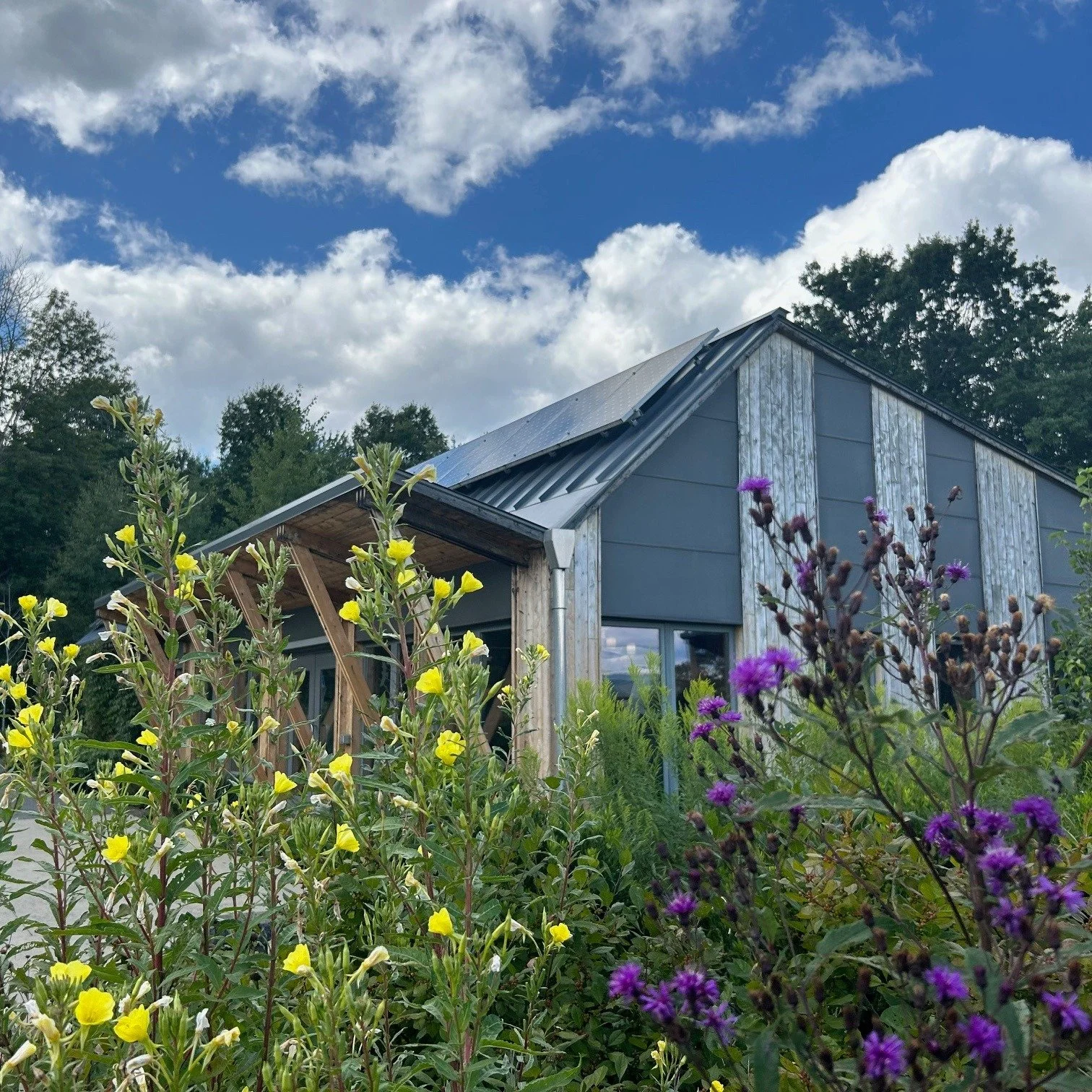
The Hitchcock Center
Credit: The Hitchcock Center
In a time when conversations around climate and sustainability feel more important than ever, organizations like the Hitchcock Center for the Environment are helping lead the way—right here in Massachusetts. Based in Amherst, this inspiring nonprofit is dedicated to connecting people of all ages with the natural world while empowering them to become thoughtful stewards of the planet. From its innovative “Living Building” to its hands-on programs for students, families, and the broader community, the Hitchcock Center is redefining what environmental education can look like. We had the chance to learn more about their mission, impact, and vision for the future.
Life in Mass (LIM): For readers who may be discovering the Hitchcock Center for the first time, can you share a bit about your mission and what inspires your work?
The Hitchcock Center (HC): The Hitchcock Center’s mission is to educate and inspire action for a healthy planet. We envision a world where people, communities and ecosystems thrive.
We provide opportunities for people of all ages to develop a relationship with nature; we lead sustainable engineering and design challenges for youth; we teach communication, organization, and leadership skill-building for teens; we convene adults for discourse and civic engagement around climate change and sustainability; and we continue to broaden our reach to include communities that are disproportionately impacted by climate change.
LIM: The Hitchcock Center has such a rich history in environmental education. How has the organization evolved over the years?
HC: The Hitchcock Center is 64 years old. It began as Long Plain Nature Center on a farm in Leverett, offering summer camp and nature programs for low-income children, primarily from Springfield and Holyoke. It grew in the ’60s and ’70s to include science and nature programs for schools and communities throughout Hampshire, Hampden and Franklin Counties. The Center moved to the Larch Hill Conservation Area in Amherst in 1976 and changed its name to the Hitchcock Center for the Environment.
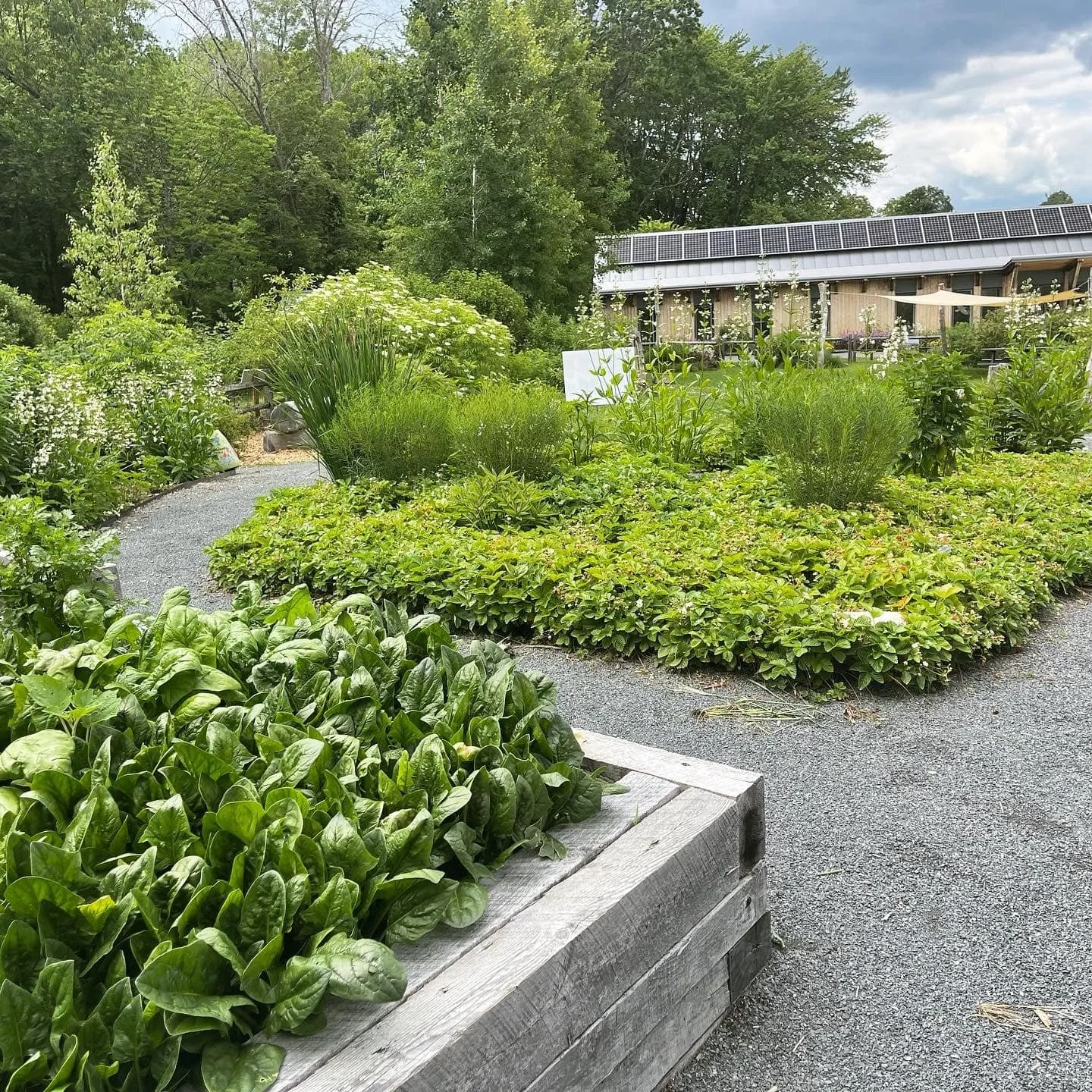
Gardens at The Hitchcock Center
Credit: The Hitchcock Center
In 2016, the Hitchcock Center moved into its new Living Building at its present location on West Street. The new building, built to achieve the most rigorous green building certification in the world, Living Building Challenge, allows the organization to grow and expand its program offerings in the community, including using the building itself as a teaching tool for sustainable engineering and design curricula, net zero energy and water programming and more.
Our work has evolved from teaching about nature to helping people to reconnect to and learn from nature, develop a problem-solving mindset, and share a positive vision for the future. The Hitchcock Center is uniquely poised to use the Living Building and outdoor learning spaces as inspiration for what a net zero future could look like, and to use our expertise and positive standing in the community to facilitate conversation and change on a community level that is inclusive and equitable.
LIM: Your “Living Building” is truly unique. Can you tell us the story behind it and what makes it so special?
When the Hitchcock Center outgrew its space at Larch Hill and embarked on a campaign to build a new building, staff realized that they had an opportunity to both exemplify the highest standards of sustainability in the built environment AND create a powerful teaching tool that supports a new approach to achieving environmental literacy in the 21st century.
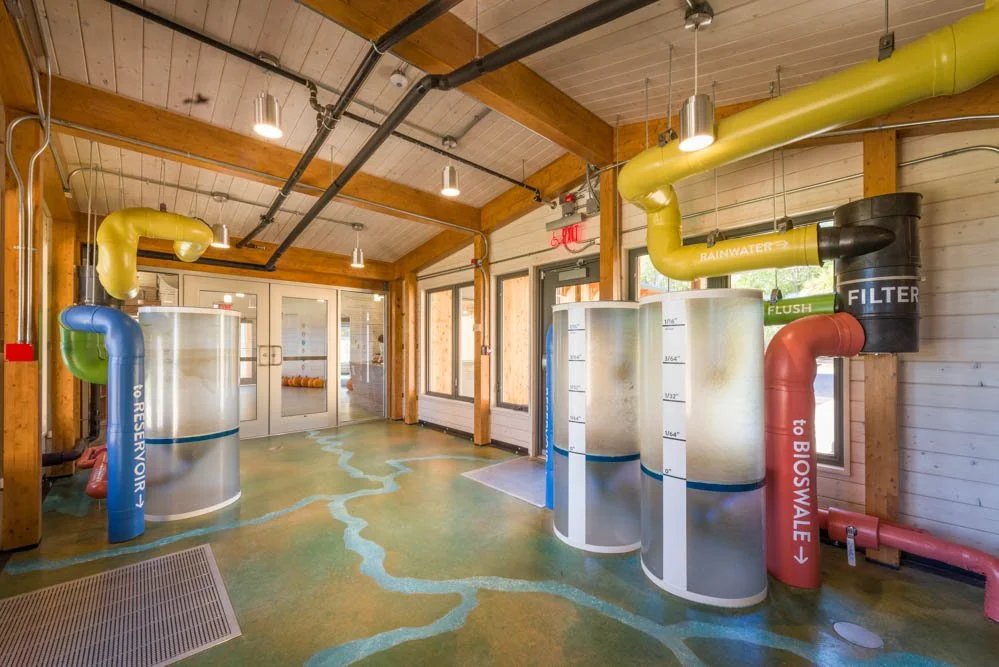
Our building is designed efficiently and beautifully and demonstrates how we can not only do less harm but also be regenerative. The net zero energy Living Building harvests and recycles its own water, generates all of its own energy (and gives some back to the grid) through solar panels, uses composting toilets, and was constructed with responsibly sourced, nontoxic materials.
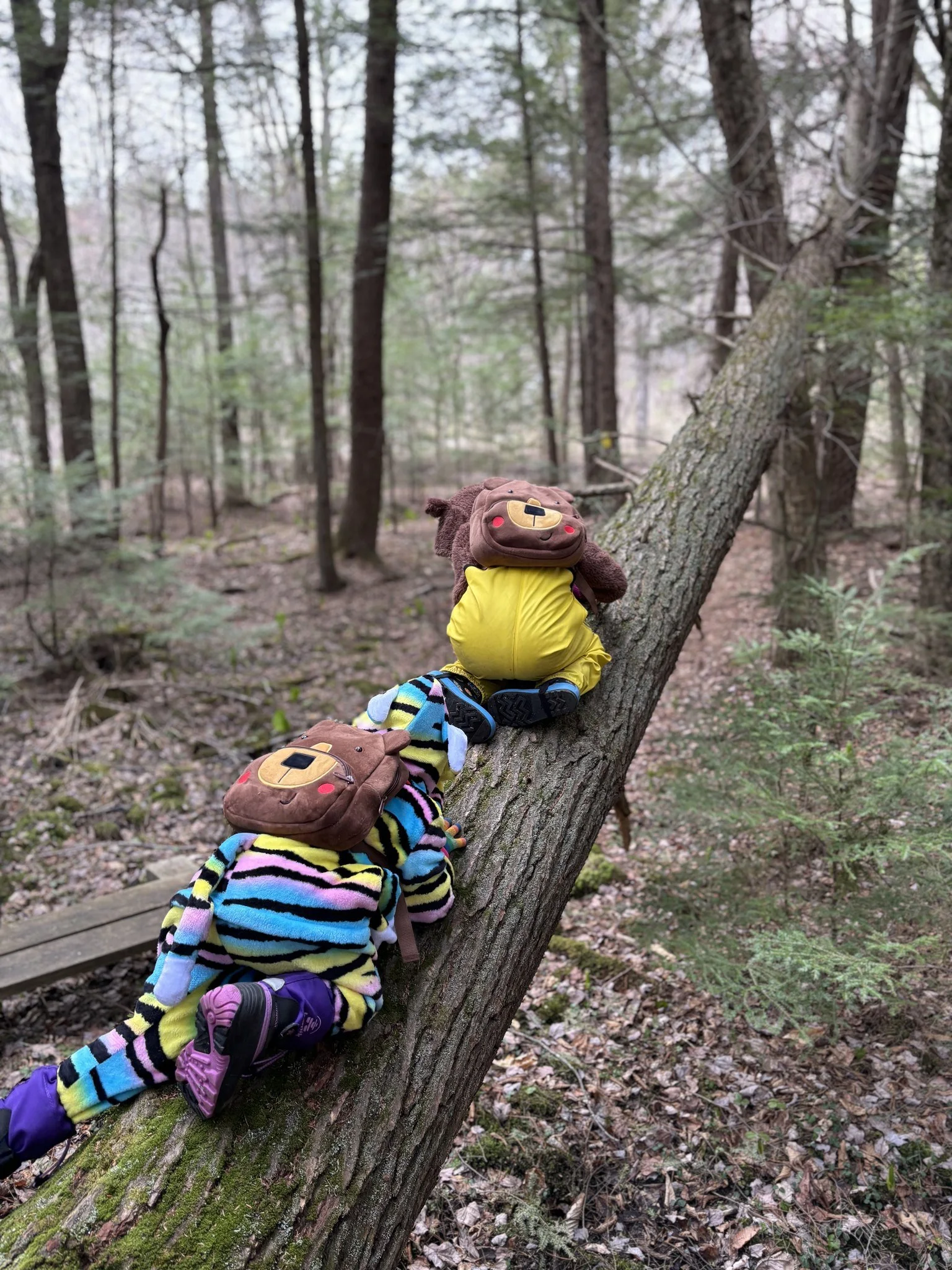
Gardens at The Hitchcock Center
Credit: The Hitchcock Center
The Hitchcock Center’s building was the 23rd certified Living Building in the world (there are currently only 35 of such buildings). It was evaluated in seven Living Building Challenge performance categories: energy, water, materials, site, equity, health & happiness, and beauty. We attained Living Building Challenge certification in 2019.
LIM: For those who haven’t visited yet, what can they expect when they step into your space for the very first time?
HC: First, I would say that the Hitchcock Center is more than just our Living Building. We have incredible grounds that have extensive native gardens, a Discovery Yard for children’s exploration and play, and trails for lovely walks.
We have a solar-powered EV charger in the parking lot!
The building itself is an experience. All of the systems are visible so that one can learn as you walk around.
Our visitor center has several live animals (turtles, a corn snake, fish, and stick bugs), humane taxidermy, a wonderful library, and some play things so that families can enjoy a lovely morning or afternoon exploring nature inside and out.
LIM: You work with students, families, and the broader community. What impact have you seen from this intergenerational approach?
HC: We see engaged families who grow up at Hitchcock! We see preschoolers whose parents attended Hitchcock preschool, counselors who attended Hitchcock summer camp as children. We see increased comfort in and appreciation for the outdoors, and we see people who turn to the outdoors for solace and restoration. We see people making environmental lifestyle choices and voting for policies and representatives that uphold green spaces and smart climate action.
LIM: How do your programs help people of all ages build a deeper connection with the natural world? & 7. Sustainability is at the heart of what you do. How do you make complex environmental topics accessible and engaging for everyone?
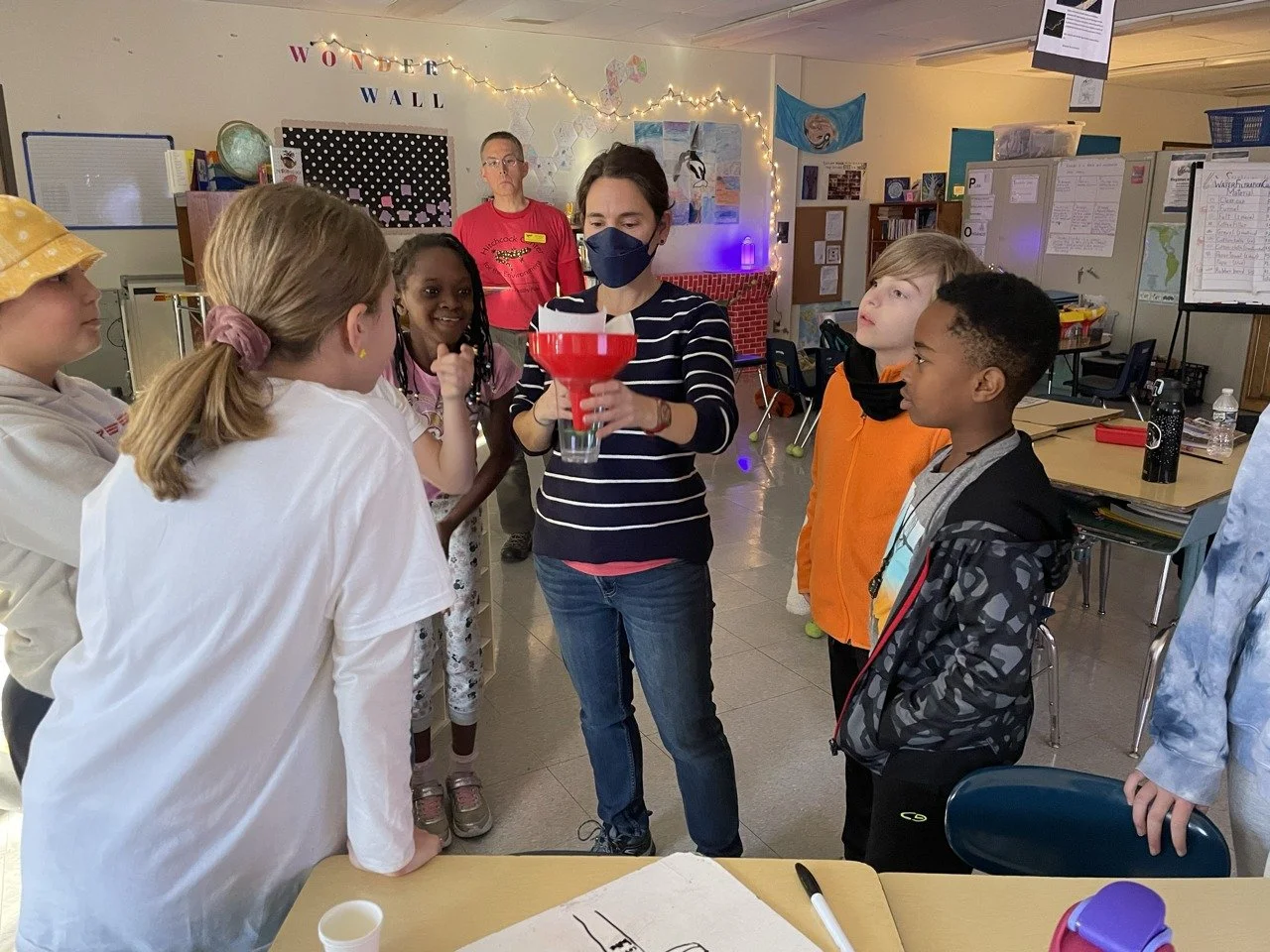
Rachel School Program at The Hitchcock Center
Credit: The Hitchcock Center
HC: We start where our learners are developmentally. For the youngest children, fostering love and care for the natural world is all about getting them outside and fostering comfort with and curiosity for the outdoors alongside loving adults. Our Little Bear Walks and Nature Discovery Preschool offer opportunities to explore nature within less-structured and thematic settings, respectively. You protect what you love, so love permeates all our programs.
For elementary school children, we offer a rich array of onsite afterschool programs and camps, in which learners play actively outdoors, engage with nature and make friends. Day after day, week after week, kids bond with their group and build an ethic of caring for each other and the forest.
At elementary and middle school residencies, Hitchcock educators build relationships with students and teachers while diving into a theme such as water conservation or engineering and design over the course of 3-5 days. Using models and prototypes, students learn foundational concepts of science and engineering and use their imaginations to dream up sustainable, nature-inspired solutions.
Upper middle school and lower high school students participate in our popular two-week Leadership Training Camp each summer, in which campers get practice facilitating activities for others while immersed in outdoor team building activities. Counselors and counselors in training at our camp receive true educator training by planning and carrying out engaging lessons, activities and games indoors and outdoors at summer camp.
Undergraduates and graduate students receive teacher training in engineering and design workshops and pedagogy, and engage in meaningful discussions about empowering learners and fostering STEM identity.
For adults, we offer myriad workshops, discussions and lectures in which lifelong learners can be in community and take action for a healthy planet. Learners of all ages and professions visit for tours of our Living Building, an ambitious model for sustainable, eco-conscious architecture that informs and exemplifies our engineering and design challenges.
The Hitchcock Center
Credit: The Hitchcock Center
By offering a continuous program arc, learners of every age can participate and see themselves as creative, hopeful problem solvers. No matter where our learners are developmentally, love and care for the earth and each other are at the heart of everything we do.
LIM: Can you share a favorite success story or memorable moment that really captures the spirit of the Hitchcock Center?
Our education director, Katie Koerten, was recently in a Springfield classroom of third graders teaching an engineering and design lesson. After a demonstration of creating an electrical circuit using alligator clips, a handheld solar panel, and an LED lightbulb, a student said to Katie, “You’re making me want to be an engineer!” There are few things more rewarding than this. This particular project, Students Engaging in Engineering and Design for Sustainability (SEEDS), aims to do exactly that: make third graders see themselves as problem solvers and innovators. We hope to leave our learners with a positive regard for STEM and curiosity about science, and when they can picture themselves in the role of engineer or scientist, we are meeting our objective.
HC: Your commitment to diversity, equity, and inclusion is an important part of your mission. How does that show up in your programs and outreach?
This commitment shows up in multiple ways. A number of years ago we transitioned to a tier-pricing system for our programs in order to broaden access to our programming. We offer our on site programs at three levels, the mid-level covers the cost of the program, the top tier is more to cover people who can not afford the full cost, and the lowest tier is set lower than the cost of the program. In addition we have scholarship money available for people who need more financial assistance than tier C.
We have been growing our school residency programs, which are often covered by grant funding at no cost to the schools, and have prioritized urban communities (such as Gateway cities including Springfield, Holyoke and others across the state that face disproportionate economic and social challenges) as well as rural communities that are dealing with scarcity of available resources and expertise, vulnerable economies, and geographic isolation.
The Hitchcock Center is reaching as many schools across Hampshire, Franklin, and Hampden counties – especially those lacking in resources – as possible to ensure all students have access to our programs.
LIM: What role do you think local organizations like yours play in addressing global environmental challenges?
HC: There are many organizations addressing climate change but few that are teaching kids to be hopeful, creative problem solvers who can take on the challenges of climate change.
The Hitchcock Center is one of the few organizations equipping youth with the skills they need to face these challenges. Through hands-on sustainable design and engineering challenges — a proven approach that develops problem-solving and collaboration skills — youth see that there are solutions and that they are empowered to make the world a better place. By uplifting youth voices and bringing youth together to advocate for climate justice, we are helping to build resilience and hope.
LIM: How can members of the community get involved—whether through volunteering, attending programs, or supporting your work?
There are so many ways to get involved! We have many programs for people of all ages. We have recurring or one-time volunteering opportunities for individuals and groups. We are only able to continue our work because of the generous support of individual donors, businesses, and foundations and would welcome your support.
LIM: Are there any upcoming programs, events, or initiatives that you’re especially excited about?
HC: Right now the education team is gearing up for our two busiest seasons: spring and summer! The spring sees the majority of our school field trips, in which classes bus to Hitchcock to learn about our Living Building or pond ecology. Most weekday mornings you will see a school bus or two in our parking lot and a whole lot of kids on the best field trip of the school year!
Our summer camp program runs for 7 weeks in June, July and August and offers a high quality childcare experience in which campers are making friends, playing games and learning about the natural world in a safe environment with nurturing counselors.
Also, for the 21+ crowd, we have a fabulous fundraising event called Battle of the Botanicals on June 18. This much-loved evening of botanically inspired drinks and food pairings will feature nine of the region’s top bartender-chef teams, each showcasing their talents with a signature appetizer and cocktail/mocktail that highlights a unique botanical feature. Attendees will vote for their favorite, and the top three bartenders will compete live in a thrilling cocktail mix-off using a mystery botanical ingredient.
LIM: What are some small, everyday actions people can take to live more sustainably here in Massachusetts?
HC: We often get this question. If one can’t install composting toilets and solar panels in their home it’s hard to know where to start. There is a great tool that the Hitchcock Center has developed in partnership with CET - The Center for Eco-Technology a Decarbonization Roadmap Quiz. It only takes a few minutes but lets you know what level you at with regards to your decarbonization journey and offers next steps for you at each level.
There are many everyday steps you can take. While you might not be able to have a rainwater capture system like the Hitchcock Center's, you could install rain barrels to collect rainwater from your gutters to use to water your plants. You might not be able to install solar panels right now but you can get a free MassSaves energy assessment and create a plan to improve your energy savings. Recycling, replacing incandescent bulbs with LED, home-composting, and planting native gardens that support local flora and fauna are four great ways to make a difference!
LIM: What’s one thing you wish more people understood about environmental education or conservation?
HC: How much it matters, and how few people actually have access to it. Science and outdoor learning are critically important for school kids but many schools don’t offer these things at all, leading to a generation of people who may not appreciate and protect the treasure that is planet Earth.
LIM: Looking ahead, what’s your vision for the future of the Hitchcock Center and its impact on the community?
I think this is best exemplified through our Values and Impact tree. Undergirded by the values that guide us, and underpin our work – continuous, joyful learning; resilience and problem solving; equity, social and environmental justice; kindness, empathy and respect; and building intentional relationships – we aim to develop hopeful, creative problem-solvers who are ready to take on environmental challenges; be a model of sustainability for our community and beyond; and convene and partner with others to create lasting community climate resilience.
Whether you’re visiting for a peaceful walk through the grounds, enrolling a child in one of their beloved programs, or simply looking for ways to live more sustainably, the Hitchcock Center for the Environment offers something truly meaningful for everyone. Their work is a powerful reminder that building a healthier planet starts with education, connection, and community—and that change is possible when we all play a part.
Find The Hitchcock Center
Website · Facebook · Instagram · Donate
(413) 256-6006